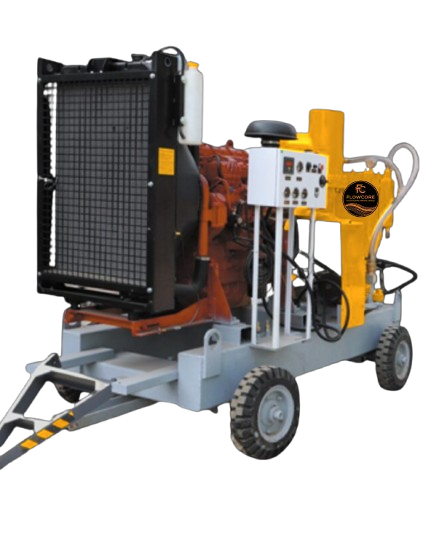
AutoPrime Surface Pumps

At Flowcore, our AutoPrime pump series is engineered to deliver superior performance in even the most demanding environments. Designed with a built-in vacuum pump and priming tank, these systems ensure 100% automatic dry priming, eliminating air from the suction line and initiating flow—even at suction heights of up to 9.8 meters.

Applications

Oil & Gas

Managing produced water, dewatering oil fields, and temporary fluid transfer.

Mining and Quarry

Dewatering open-pit mines, quarries, and sumps, and handling slurries.

Municipalities

Sewer bypass operations, emergency flood control, and general dewatering tasks.

Construction

Foundation dewatering, trench dewatering, and general site water management.

Industry

Wastewater treatment, process fluid transfer, and plant maintenance.

Civil Work

Dewatering for bridge construction, road works, and underground utility projects.

Flood Control

Emergency response for flood mitigation, storm surge, and high rainfall events.

Available Variants
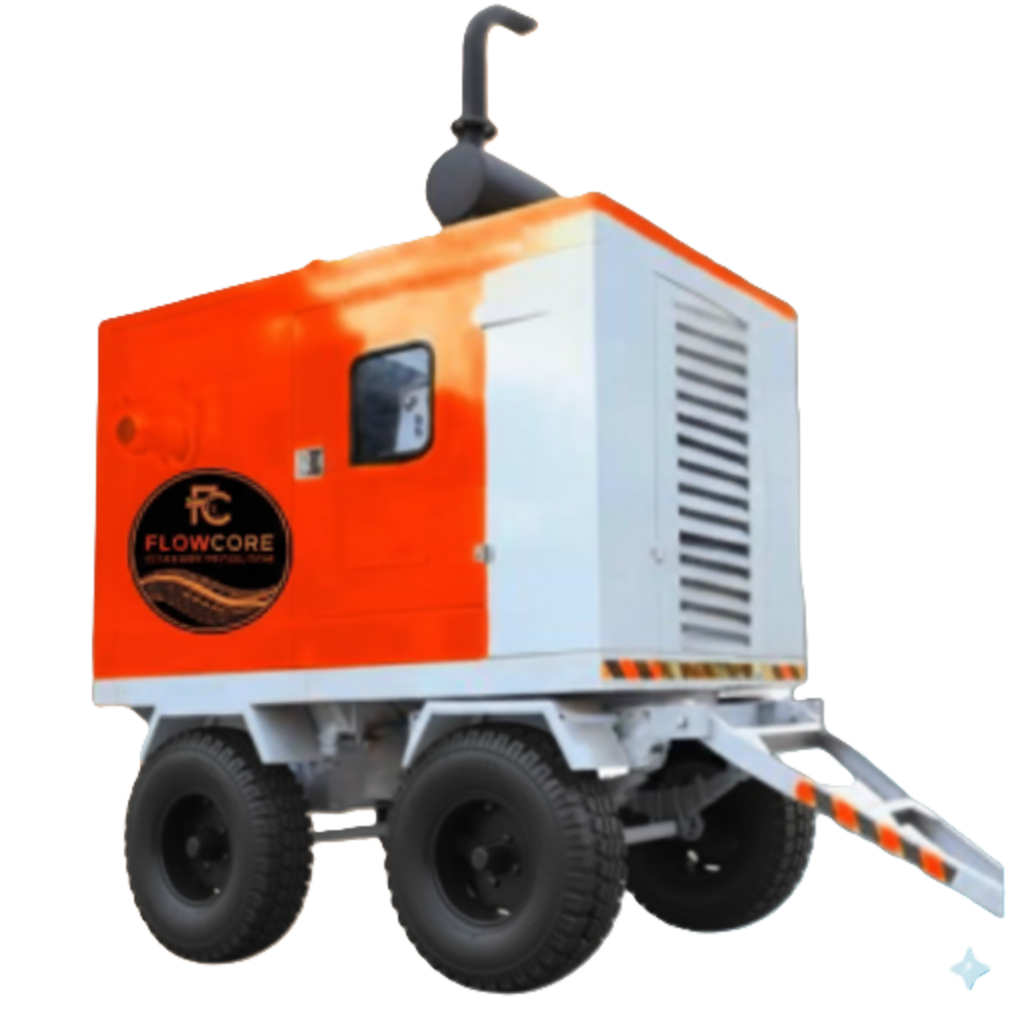
AutoPrime with Canopy – CAP EC/MC

AutoPrime with Canopy – CAP EC/MC

Head Range: 30 – 169 m

Flow Range: 160 – 4469 m³/hr

Power (HP): 32 – 1550+

Prime Mover: Engine / Motor

Mounting: 4-Wheel Trolley with Canopy

Applications

  • Noise-sensitive areas
  • Mobile dewatering

Key Features

  • Weather-protected enclosure
  • Noise-reducing canopy
  • Towing hook for mobility
AutoPrime without Canopy – CAP ET/MT

AutoPrime without Canopy – CAP EC/MW

Head Range: 30 – 169 m

Flow Range: 160 – 4469 m³/hr

Power (HP): 32 – 1550+

Prime Mover: Engine / Motor

Mounting: 4-Wheel Heavy Trolley

Applications

  • Mobile dewatering at multiple locations

Key Features

  • Compact size for maneuverability
  • Towing hook for transport
  • No canopy – easy access for servicing

The Flowcore Advantage

Unmatched Efficiency

Our pumps are designed with advanced impeller and volute technology to maximize flow and head while minimizing energy consumption.

Robust & Reliable

Built with high-quality, durable materials to withstand the toughest industrial conditions and a long service life.

Automated Priming

The built-in vacuum system ensures quick and reliable priming every time, saving you time and labor on site.

Ease of Maintenance

Designed with a user-friendly open-access impeller, making routine maintenance and inspection simple and quick.

Technical Specifications

Material of Construction

  • Pump Body: Cast Iron / Stainless Steel
  • Impeller: Cast Iron / Stainless Steel
  • Shaft: Stainless Steel
  • Priming Tank: Mild Steel / Stainless Steel
  • Mechanical Seal: Carbon-Ceramic with SS spring

Performance Data

  • Max. Head: Up to 169 m
  • Max. Flow Rate: Up to 4469 m³/hr
  • Suction Lift: Up to 9.8 m
  • Max. Solids Handling: Up to 76 mm

Operational Details

  • Priming Time: Varies by head, typically under 2 minutes
  • Drive Source: Diesel Engine or Electric Motor
  • Mounting: Trolley-mounted or Skid-based

Performance Curves

Our pump performance curves illustrate the relationship between head, flow, and efficiency for each model. This data helps you select the optimal pump for your specific application requirements. Contact our team for detailed curves for your selected model.

Frequently Asked Questions

What is Auto-Priming or Self-Priming?

Auto-priming, also known as self-priming, is the ability of a pump to automatically remove air from the suction line and casing, allowing it to start pumping fluid without being manually filled or 'primed' with liquid beforehand. This is crucial for applications where the pump is located above the fluid source.

What is a Auto-Prime Pump?

An Auto-Prime Pump is a type of pump equipped with a built-in vacuum system or a specialized priming tank that automatically primes the pump. This eliminates the need for manual priming, making operation easier and more efficient, especially in dewatering applications.

What is Pump Priming?

Pump priming is the process of filling a pump and its suction line with liquid before starting it. This is done to prevent the pump from running dry and to ensure a continuous flow of liquid, as most pumps are designed to move liquids, not air.

Where is your factory located?

Our factory is located at Plot No. 273, S.V. Road, Near M.V.P School, Palghar (West), Dist. Palghar, Maharashtra - 401404.

Are you ISO certified?

Yes, we are ISO 9001:2015 certified, which demonstrates our commitment to quality management and customer satisfaction.

How will you carry out after-sales support?

We have a dedicated service team for all after-sales support. For any issues, you can contact us via our phone number or email, and our technicians will assist you in troubleshooting, maintenance, or repair.

What’s the warranty for the pumps?

Our pumps come with a one-year warranty on manufacturing defects. This warranty covers the repair or replacement of any defective parts.

Can I get more than 1000 m³/hr flow rate in any of your pumps?

Yes, some of our models, such as the CAP EC/MC and CAP ET/MT, are capable of delivering flow rates of up to 4469 m³/hr, making them suitable for large-scale industrial dewatering projects.

What is the relation between Head and Flow?

Head and flow have an inverse relationship. As the total head (the vertical distance the fluid needs to be pumped) increases, the flow rate (the volume of fluid pumped over time) decreases. This is a fundamental principle of pump performance.

What is Pump Flow rate?

The pump flow rate is the volume of fluid that a pump can move in a given time. It is typically measured in units like liters per minute (LPM), cubic meters per hour (m³/hr), or gallons per minute (GPM).

What is Delivery Head?

Delivery head is the vertical distance the pump must lift the fluid from the pump's centerline to the point of discharge. It is also referred to as the discharge head.

What is Pump Head?

Pump head is a measure of the energy a pump provides to the fluid. It is expressed as the height of a column of fluid that the pump can lift. Pump head is a more universal measure of a pump's capacity than pressure, as it is independent of the fluid's density. The total head is the sum of the suction head, delivery head, and friction head.

What type of water is removed in the process of dewatering?

Dewatering involves removing accumulated ground or surface water. This can include anything from clear water to muddy water with high concentrations of suspended solids, as well as sludge and slurries from construction sites, mines, and other industrial applications.

What is dewatering?

Dewatering is the process of removing water from a solid material or soil to a solid-liquid separation. It is commonly used in mining, construction, and agriculture to prepare a site for work or to manage excess water.

For 8" pumps, what's the power rating for the engine?

For our 8" pumps, the engine power rating typically ranges from 120 HP to 250 HP, depending on the specific model and the required head and flow performance.

How often do we need to replace the oil filter & fuel filter?

The oil and fuel filters should be replaced every 250 to 500 working hours, or as recommended in the engine's manual, to ensure optimal performance and longevity.

What's the time period of engine oil change?

The engine oil should be changed every 250 to 500 working hours, or as specified in the engine's manual, to maintain proper lubrication and prevent engine damage.

What are the engines you're using?

We use high-quality, reliable engines from leading manufacturers like TATA Motors, Ashok Leyland, and others. We choose engines that are known for their durability and performance in demanding environments.

Your pumps are of which size?

Our AutoPrime pumps come in a variety of sizes, ranging from 4" to 12" to suit different flow rate and head requirements.

How often do we need to drain the auto prime tank?

The auto prime tank should be drained periodically to remove any debris or sediment that may have settled. This helps maintain the efficiency of the priming system and prevents potential blockages.

What type of drive source is used in Auto-Prime/Self-prime pumps?

Our Auto-Prime pumps can be powered by either a diesel engine or an electric motor, providing flexibility for different site requirements.

What are the customizations available in our Auto-Prime Pumps?

We offer several customization options, including different engine or motor brands, mounting configurations (trolley or skid-based), and material choices for the pump components to suit specific fluid and application needs.

What is Suction head?

The suction head is the vertical distance from the fluid surface to the centerline of the pump impeller. It is the height the pump must "pull" the fluid from.

What is Total Head?

Total head is the total equivalent height that a fluid is to be pumped. It is the sum of the suction head, the delivery head, and any friction head caused by fluid flow through the pipes and fittings.

What is Shut-off Head?

Shut-off head is the maximum head a pump can generate when its flow rate is zero (i.e., when the discharge valve is completely closed). This is an important performance parameter for pump selection.